

Wenhua Chengfeng: +86-535-2137899
Guhe Electrical: +86-535-2137058
Huahang Shengshi: +86-10-62308088

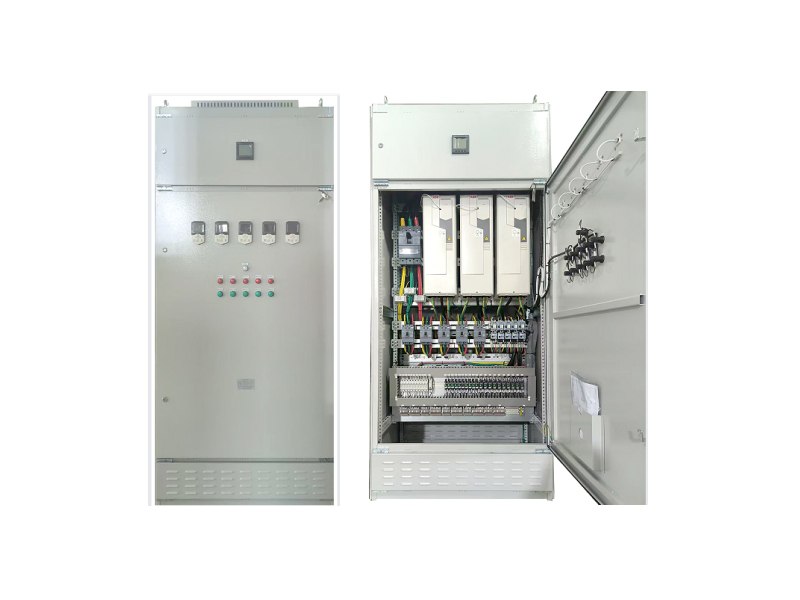
The Air Conditioning Circulation Pump Control Cabinet is the core control unit of the central air conditioning system. It is responsible for regulating the operation status of the circulation pump(s) in the air conditioning water circulation system, ensuring the cooling/heating efficiency of the system. It is widely used in commercial buildings, hotels, office buildings, large shopping malls, and similar applications. Its core functions include:
• On-Demand Speed Control and Energy Saving: In coordination with the air conditioning system's temperature controller and flow sensors, it automatically adjusts the circulation pump's speed based on the actual indoor temperature and water flow rate (e.g., increasing pump speed to accelerate water circulation when the indoor temperature exceeds the setpoint during summer cooling). Compared to traditional fixed-frequency operation, this can save 25%-40% in energy, reducing the overall energy consumption of the air conditioning system.
• Seasonal Mode Switching: Supports one-click switching between Cooling, Heating, and Ventilation modes. It automatically adjusts the circulation pump's operating parameters in different modes (e.g., raising the water circulation temperature threshold in heating mode and lowering it in cooling mode) to adapt to seasonal changes, eliminating the need for manual parameter reconfiguration.
• Anti-Freeze Protection: During winter shutdowns, it automatically monitors the circulating water temperature. When the temperature drops below 5°C, it activates the circulation pump at low speed or turns on an electric heating device to prevent pipe freezing and potential rupture, thereby reducing equipment maintenance costs.
• System Fault Diagnosis: It continuously monitors the circulation pump's current, voltage, winding temperature, and pipeline pressure. In case of faults such as overload, locked rotor, or pipeline overpressure, it immediately shuts down for protection and displays a fault code, facilitating quick troubleshooting for maintenance personnel (e.g., "E01" indicates an overload fault, "E02" indicates pipeline overpressure).
Copyright © Yantai Wenhua Chengfeng Environmental Protection and Energy Saving Equipment Co., Ltd. All Rights Reserved.